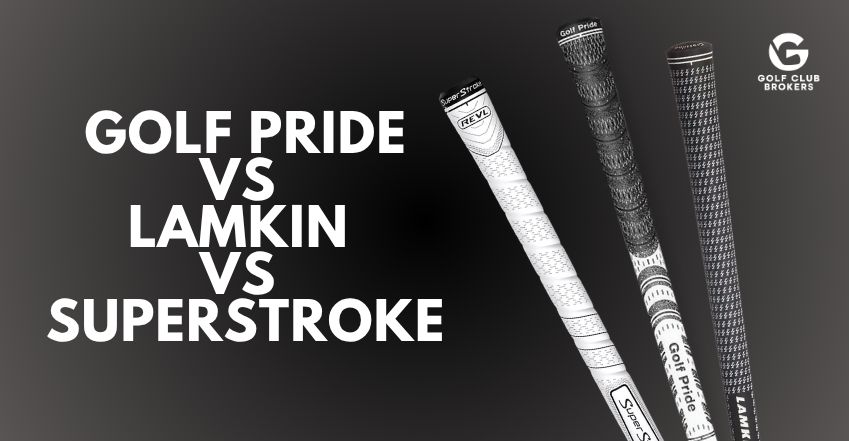
Golf Pride vs Lamkin vs SuperStroke: The Honest 2026 Grip Comparison
Walk into any golf shop and head to the grip wall. You'll see three brands dominating the wall space — Golf Pride, Lamkin, and SuperStroke. Everyone else is fighting for the leftover real estate.
Three brands. Hundreds of grip models. And almost zero useful guidance on which one is actually right for you.
Most online comparisons of these brands tell you what each grip is made of and call it a day. That's not enough. What you actually need to know: which brand dominates in cord, which one rules the putter market, what changed when SuperStroke bought Lamkin in 2024, and which models are objectively the best in each category. This is that comparison. No brand favorites. No paid placements. Just the honest assessment from a shop that regrips thousands of clubs every year.
Quick Answer: There's no single best — each brand wins in different categories. Golf Pride is the most-used brand on the PGA Tour and the safest default for full-swing grips, with the MCC Plus4 as the most popular hybrid grip in golf. Lamkin (acquired by SuperStroke in 2024) makes the best classic rubber grip on the market in the Crossline, plus the glove-free favorite Sonar. SuperStroke is the dominant putter grip brand by a wide margin, with the Zenergy and Pistol GT lines accumulating hundreds of tour wins. For most golfers, the right answer is a mix: Golf Pride or Lamkin on your full-swing clubs, SuperStroke on your putter.
Brand-by-Brand: What Each One Actually Does Best
Golf Pride: The Tour Standard
Golf Pride is the most-used grip brand on the PGA Tour, and has been for decades. Their lineup spans every construction type — rubber, cord, multi-compound — and every feel category from firm to soft. If you're not sure what to put on your clubs, a Golf Pride grip is the lowest-risk default in the industry.
The lineup organizes around three flagship families:
- Tour Velvet: The original Golf Pride grip and still the entry-level industry standard. Soft rubber, classic feel, durable, affordable. The Tour Velvet 360 adds a slightly tackier texture for golfers who want a touch more grab. If your goal is to regrip your set without overthinking it, this is the grip.
- MCC and MCC Plus4: The most popular hybrid (multi-compound) grip in golf. Cord in the upper hand for all-weather control, softer rubber in the lower hand for feel. The Plus4 version simulates four extra wraps of tape under the lower hand to reduce grip pressure and encourage a lighter grip on the trail hand. The Plus4 won MyGolfSpy reader recommendations more than any other grip in 2025.
- CP2 Series (CP2 Wrap, CP2 Pro): Maximum-soft full-rubber grips for players who want pure cushioning. Best for golfers with hand or wrist issues, arthritis, or anyone who prefers a softer feel over the firmer cord textures.
Where Golf Pride dominates: full-swing grips, especially in wet or humid conditions. The MCC line's cord upper hand manages moisture better than almost any competitor. Z-Grip Cord and Tour Velvet Cord take that idea further with full-cord construction for players in genuinely wet climates.
Where Golf Pride is weaker: putter grips. Their Tour SNSR and Reverse Taper lines are competent products, but they don't dominate the putter market the way SuperStroke does. Most tour players who game Golf Pride on their full swing clubs switch to SuperStroke (or a custom putter grip) on their flat stick.
Lamkin: The Durable Workhorse (Now Owned by SuperStroke)
Lamkin's history goes back to 1925, making them one of the oldest grip manufacturers in golf. Their flagship Crossline grip is one of the most durable, most respected rubber grips ever made — and a workhorse choice for golfers who regrip themselves and want longevity over flash.
Here's what changed recently: SuperStroke acquired Lamkin in 2024. The Lamkin brand still exists, but the lineup has been refreshed under SuperStroke's design direction. The Crossline retains its DNA — the Cross Traction surface pattern, the firm-but-grippy rubber compound — but now uses SuperStroke's Modern Taper profile with a thicker lower-hand section that mimics extra wraps of tape (similar to the Golf Pride Plus4 concept).
The current Lamkin lineup worth knowing:
- Crossline (and Crossline Full Cord): The classic. Densely-spaced surface pattern produces excellent traction. Firmer feel than most rubber competitors, slightly less tacky. Used by countless club builders as their default offering for years. Durable enough that it routinely outlasts other rubber grips by 20-40%.
- Sonar / Sonar+ Tour: The glove-free favorite. Soft, tacky, wraps the hand without the firmness of cord. MyGolfSpy reviewers consistently flag the Sonar as one of the best grips for golfers who don't wear a glove. Some users report it gets slick when wet, so it's not the right pick if you play in heavy rain or humid conditions, but for dry conditions it's outstanding.
- UTX (Ultra Tac Hybrid): Lamkin's MCC Plus4 competitor. Cord upper hand, soft rubber lower hand. Direct alternative to the Golf Pride MCC line — performs similarly, typically priced slightly lower.
- Dual Density Torsion Control: Oversize option with a denser core and softer outer skin. Reduces grip pressure for players who tend to over-squeeze the club. Less common than the others but a strong choice for players with hand fatigue or tension issues.
Where Lamkin dominates: durability and value. A set of Crossline grips routinely lasts 18-24 months for regular players (versus 12-18 for most competitors), and they're typically priced a few dollars below comparable Golf Pride options. For golfers who DIY their regripping, the math works in Lamkin's favor.
Where Lamkin is weaker: tour visibility. They're not on PGA Tour bags as often as Golf Pride, which means brand recognition is lower among amateur golfers shopping their first regrip. This is shifting under SuperStroke's ownership, but slowly.
SuperStroke: The Putter Grip King
SuperStroke built its reputation on a single product category that no one else mastered first: the non-tapered, oversized putter grip. Their original innovation was simple — make a putter grip that's the same diameter from top to bottom, which forces both hands to apply equal pressure and locks the wrists out of the putting stroke. The result is a more stable face angle through impact and significantly fewer pulls and pushes.
That single product category has produced hundreds of professional tour wins and made SuperStroke the dominant putter grip brand on every major tour.
The current SuperStroke lineup spans both putter and full-swing categories:
- Zenergy (Pistol GT, Tour 3.0, Claw, Flatso): The flagship putter grip family. Available in multiple shapes — Pistol GT for traditional players, Tour 3.0 for jumbo non-tapered, Claw for arm-lock setups, Flatso for golfers who want a more square handle profile. All variants share the no-taper, reduced-pressure DNA that defines the brand.
- S-Tech: SuperStroke's full-swing grip with minimal taper — the same reduced-pressure concept applied to drivers, fairway woods, and irons. Tacky surface, performs well in wet and hot conditions. Less mainstream than Golf Pride or Lamkin but gaining traction.
- REVL Series (REVL Player, REVL Comfort): Newer full-swing line that applies SuperStroke's design philosophy more broadly. REVL Player is the firmer, more traditional option; REVL Comfort prioritizes softness for players with hand sensitivity.
Where SuperStroke dominates: putter grips, full stop. If you're upgrading a putter grip in 2026, SuperStroke makes the largest selection of high-quality options in the industry. The Pistol GT alone has dozens of color and pattern variants.
Where SuperStroke is weaker: full-swing grip market share. The S-Tech and REVL grips are competent products, but they haven't displaced Golf Pride or Lamkin in most golf shops. Most golfers experimenting with SuperStroke full-swing grips do so after trying the brand on their putter and liking the feel. For more on the putters that pair best with SuperStroke grips, see our TaylorMade Spider Putter Evolution and Scotty Cameron model guide.
Side-by-Side: The Three Brands at a Glance
| Category | Golf Pride | Lamkin | SuperStroke |
|---|---|---|---|
| Founded | 1949 | 1925 | 1999 |
| Tour share (full-swing) | Dominant — most-used | Moderate | Growing |
| Tour share (putters) | Modest | Modest | Dominant |
| Best swing grip | MCC Plus4 (hybrid) | Crossline / UTX | S-Tech |
| Best putter grip | Tour SNSR | Crossline Putter | Zenergy Pistol GT |
| Construction strength | Multi-compound (cord+rubber) | Pure rubber durability | Polyurethane putter grips |
| Wet-weather performance | Excellent (cord lines) | Good (Sonar weaker, UTX strong) | Good |
| Durability | Strong | Excellent (industry-leading) | Strong |
| Tackiness (out of package) | Medium-high | Medium | High (soft); firm (putter) |
| Best for first-timer regrippers | Tour Velvet or MCC | Crossline | Putter only |
Note on the Lamkin acquisition: SuperStroke acquired Lamkin in 2024, but both brands continue operating with separate product lineups. There's no current plan to consolidate the brands. Lamkin retains its identity as the durable workhorse rubber-grip maker; SuperStroke continues to dominate putter grips. The two product lines complement rather than overlap.
Which Grip Should You Choose? Matching Brand to Player
If You Play in Hot, Humid, or Wet Conditions
Cord grips are your friend. The cord material wicks moisture and maintains traction even when your hands or the grip get wet. Top picks: Golf Pride MCC or MCC Plus4 (best multi-compound), Golf Pride Z-Grip Cord (full cord, maximum traction), Lamkin UTX (cord/rubber hybrid alternative to MCC), or Lamkin Crossline Full Cord (firmer, more traditional full-cord feel). For golfers in Southern climates, coastal areas, or anyone who deals with serious hand sweat, cord is genuinely worth the slight comfort trade-off.
If You Don't Wear a Glove
Soft rubber grips with high tack are the answer. Top picks: Lamkin Sonar / Sonar+ Tour (the go-to choice for glove-free players in dry conditions), Golf Pride CP2 series (maximum soft cushioning), or IOMIC Sticky if you want to look outside the big three. Avoid full-cord grips, which will eat your hands without a glove between you and the surface.
If You Have Hand or Wrist Sensitivity
Look at reduced-pressure grips designed to encourage a lighter grip. Top picks: Golf Pride MCC Plus4 or Lamkin UTX (Plus4 / oversize lower hand reduces grip pressure), Lamkin Dual Density Torsion Control (denser core, softer outer skin), or Golf Pride CP2 (full soft rubber). For severe arthritis or grip strength issues, also consider oversize or jumbo grips, which require less squeeze pressure to maintain control.
If You're Upgrading Your Putter Grip
SuperStroke is almost certainly the answer. The Zenergy family covers every putter grip preference — Pistol GT for traditional players, Tour 3.0 for jumbo non-tapered, Claw for arm-lock players, Flatso for square-handle preference. Counter-balanced versions add weight in the butt of the grip to stabilize the head through the stroke. If you've never tried a non-tapered putter grip, the Pistol GT 1.0 is the easiest entry point.
Exceptions where SuperStroke might not be right: if you want a classic Ping-style thin pistol grip, look at Scotty Cameron stock grips, Iomic putter grips, or the older Golf Pride Tour Wrap. Some golfers prefer the feedback of a traditional thin grip and find SuperStroke too oversized. For the putter heads themselves, see our best putters under $200 guide.
If You Just Want the Default for Everything
Honest recommendation: full set of Golf Pride MCC Plus4 on your woods, hybrids, irons, and wedges, plus a SuperStroke Pistol GT on your putter. This is the closest thing to a default "set and forget" grip combination for most golfers. The MCC Plus4 performs well in nearly all conditions, suits most hand sizes, and is durable enough to last 12-18 months. The SuperStroke putter grip handles the green. You can spend a lifetime golfing without changing those grips and never feel like you made a wrong call.
Regripping at Home: What the Three Brands Cost in Reality
Most golfers DIY their regripping once they realize it's a 20-minute job that costs significantly less than a pro shop installation. All three brands sell their grips through the same retail channels, and pricing follows a consistent pattern:
- Entry-tier grips (Golf Pride Tour Velvet, Lamkin Crossline standard rubber): the most affordable. Suitable for full bag regrips on a budget.
- Mid-tier grips (Golf Pride MCC, Lamkin UTX, SuperStroke S-Tech): the most popular price point. Multi-compound or premium rubber, strong all-around performance.
- Premium-tier grips (MCC Plus4 Align, Lamkin Dual Density, SuperStroke REVL): the highest pricing in the standard lineup. Aligned grips, dual-density construction, specialty features.
- Putter grips (SuperStroke Zenergy, Golf Pride Tour SNSR): standalone pricing. SuperStroke putter grips trend toward the higher end of the category, reflecting the more complex polymer construction and oversized designs.
All three brands sell their grips through pro shops, golf retailers, and online channels. We won't list specific dollar figures here because grip pricing fluctuates with promotions and bulk purchase availability — check your preferred retailer for current pricing. What we can say: the price-per-grip difference between Lamkin Crossline and Golf Pride MCC Plus4 is meaningful when you're buying 13 of them at once. For the step-by-step regrip process, see our when and how to regrip your golf clubs guide.
Common Mistakes When Choosing Grips
- Buying based on tour visibility alone. Just because Rory plays Golf Pride doesn't mean Golf Pride is right for your hands. Match the brand and model to your actual conditions and preferences — humid climate, glove or no glove, hand size, hand pressure tendencies.
- Ignoring grip size. More important than brand. A perfectly chosen MCC Plus4 in the wrong size performs worse than a generic Tour Velvet in the right size. Check your hand size against the manufacturer's sizing chart before ordering.
- Putting cord on driver and wedges. Cord grips are designed for wet conditions and aggressive grip pressure on full-swing clubs. On wedges where you choke down for partial shots, the cord can chew up the lower hand. Most pros run full cord on driver and irons, then switch to softer rubber on their wedges.
- Cheap grips on a premium set. If you've invested in a quality used iron set, putting the bottom-tier grip on those clubs is a false economy. A modest grip upgrade across 8 irons makes the whole set feel significantly better and costs less than a single round of golf.
- Mixing brands inconsistently. If you have Golf Pride on your 6-iron and Lamkin on your 7-iron, they'll feel different in your hands and disrupt the consistent feel that helps with rhythm. Pick a brand and a model for your full-swing set, and stay consistent.
Key Takeaways: Choosing Between the Big Three
- Golf Pride is the safest default for full-swing grips. Most-used brand on the PGA Tour, the MCC Plus4 is the most popular hybrid grip in golf, and the lineup covers every player preference.
- Lamkin (now SuperStroke-owned) is the durability and value play. The Crossline outlasts most competitors by 20-40 percent. Sonar is the best glove-free option in the category.
- SuperStroke dominates putter grips. Zenergy Pistol GT, Tour 3.0, Flatso, and Claw cover every putter grip preference. For full-swing grips, S-Tech and REVL are competent but not category leaders.
- The 2024 acquisition matters. SuperStroke now owns Lamkin, but both brands continue as separate product lines that complement rather than overlap. Lamkin handles full-swing; SuperStroke handles putter.
- Cord for wet conditions and aggressive players. Multi-compound (MCC, UTX) for balanced performance. Soft rubber (CP2, Sonar) for comfort and glove-free play.
- Grip size matters more than brand. Get the size right first. Pick the brand and model second.
- Default recommendation: Golf Pride MCC Plus4 on full-swing clubs, SuperStroke Pistol GT on the putter. Covers most players, most conditions.
Frequently Asked Questions: Grip Brand Comparison
Are Golf Pride grips better than Lamkin?
Not categorically — they win in different areas. Golf Pride has more tour visibility and dominates the multi-compound (cord+rubber) hybrid grip category with the MCC Plus4. Lamkin has greater durability across their rubber grips, particularly the Crossline, which routinely lasts 20-40% longer than competitors. For most golfers, the choice comes down to preference: Golf Pride for tour-validated all-weather performance, Lamkin for durable value-focused rubber.
Did SuperStroke buy Lamkin?
Yes. SuperStroke completed its acquisition of Lamkin in 2024, consolidating two of the three major grip brands under one company. The two product lines continue operating separately — Lamkin retains its full-swing focus with rubber and cord grips, while SuperStroke maintains its dominance in the putter grip category. The acquisition has resulted in design refreshes within the Lamkin lineup, including the updated Modern Taper profile on the Crossline.
What is the most popular golf grip on tour?
The Golf Pride MCC Plus4 is the most popular hybrid grip on the PGA Tour, with cord construction in the upper hand for moisture management and four extra wraps of tape simulated under the lower hand for reduced grip pressure. For pure rubber grips, the Golf Pride Tour Velvet remains widely used. For putter grips, SuperStroke's Zenergy and Pistol GT lines dominate tour bags, with hundreds of professional wins between them.
Which grip brand is best for wet weather?
Cord grips win in wet conditions, and Golf Pride leads the cord category. The MCC and MCC Plus4 are the most popular hybrid (cord/rubber) options on the market. Golf Pride Z-Grip Cord and Tour Velvet Cord are excellent full-cord options for golfers in genuinely wet climates. Lamkin's Crossline Full Cord and UTX hybrid are direct competitors with comparable wet-weather performance. SuperStroke's S-Tech also performs well in moderate moisture but doesn't lead the category.
Should I use SuperStroke grips on my full set?
You can, but you don't need to. SuperStroke's S-Tech and REVL full-swing grips are competent products with reduced-pressure design philosophy, but they haven't displaced Golf Pride or Lamkin as the dominant full-swing grip choices. SuperStroke's strength is putter grips, where they genuinely lead the category. Most players who use SuperStroke putter grips choose Golf Pride or Lamkin for their full-swing clubs.
How long do Lamkin Crossline grips last?
With normal play (1-2 rounds per week, occasional range sessions), Lamkin Crossline grips typically last 18-24 months — significantly longer than most rubber grips. The Cross Traction surface pattern resists wear better than smooth rubber, and the firm compound holds up to repeated grip pressure without compressing as quickly. For heavy players (3+ rounds per week plus frequent range work), expect 12-15 months. The Crossline's durability is one of the main reasons club builders recommend it for golfers who regrip themselves.
What is the difference between MCC and MCC Plus4?
Both grips use the same multi-compound construction — Golf Pride's Brushed Cotton Cord in the upper hand and softer rubber in the lower hand. The Plus4 simulates four additional wraps of grip tape under the lower hand, creating a slightly larger lower-hand diameter. The result is reduced grip pressure on the trail hand and more consistent control through impact. The MCC is the standard option; the Plus4 is the upgrade for players who want the reduced-pressure feel without buying an oversize grip.
Is a SuperStroke putter grip worth it?
For most golfers, yes. The non-tapered, oversized design genuinely changes how the wrists behave during the putting stroke, encouraging more stability through impact and fewer pulls and pushes. The Pistol GT 1.0 is the easiest entry point if you've never tried a SuperStroke. If you prefer the traditional thin pistol-shape feel of a Ping or Scotty Cameron stock grip, SuperStroke may feel too oversized at first — give it three rounds before judging.
Related Articles
- When and How to Regrip Your Golf Clubs
- How to Clean Your Golf Clubs
- How to Store Your Golf Clubs Year-Round
- Golf Club Fitting: The Complete Guide
- Best Putters Under $200
Most used clubs that come through GCB have either fresh stock grips (if recently bought new) or worn grips that need replacement. We grade grip condition honestly on every listing, and we'll tell you upfront when a club needs a regrip versus when the existing grip has plenty of life. If you're picking up a used set and want to upgrade the grips at the same time, we can point you to the right brand and model for your game. No commission. No upsell. Just the right grip for your hands and your conditions.